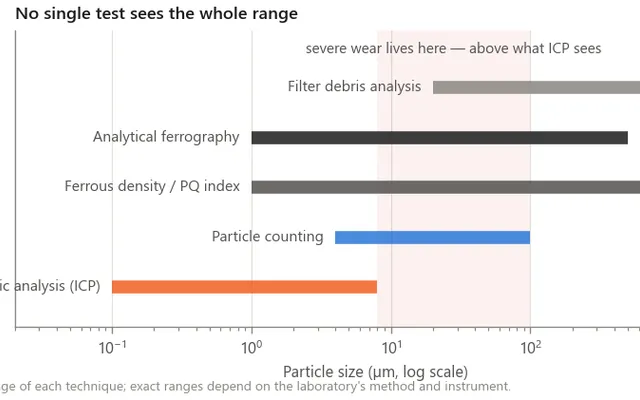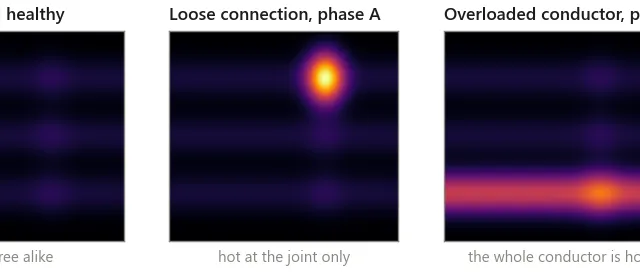


Condition monitoring is the practice of continuously or periodically measuring machine parameters such as vibration, temperature, and current in order to detect developing faults before the machine fails. Ensuring machines and equipment run smoothly is a constant challenge, and this challenge becomes more manageable with condition monitoring, Condition Monitoring is not just another process; it’s a smart way to understand machines better, because these measured parameters act like signals, telling us what’s happening inside the machines and whether they might have problems. This article covers the online and offline forms of monitoring, how to implement it, the main methods, the P-F curve, and the benefits it delivers. Condition Monitoring is a crucial part of industrial machine maintenance.
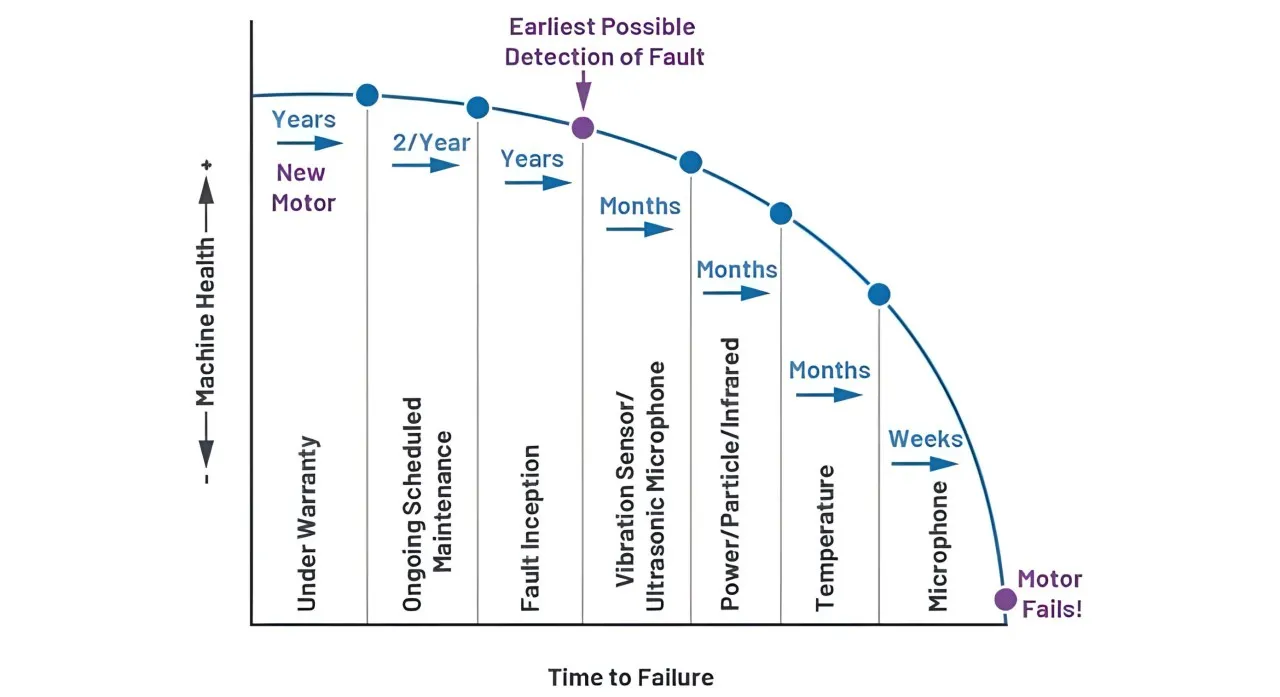
Being Proactive
One of the best things about Condition Monitoring is that it’s proactive. Instead of waiting for machines to break down, we can use it to predict when something might go wrong. By keeping a close eye on these signals, we can plan repairs and maintenance well in advance, often before the machines become seriously damaged. This means we can fix problems before they make the machines stop working, optimizing maintenance reliability and reducing downtime. This proactive approach is central to predictive maintenance applications.
What Machines Does It Work Best For?
Condition Monitoring is most useful for rotating equipment and auxiliary systems. These machines include things like compressors, pumps, and gearboxes. Condition Monitoring really shines when used on them because it gives us great insights into how they’re doing. Condition Monitoring comes in two main types: Online Monitoring and Offline Monitoring. Let’s see what makes them different:
| Offline Monitoring | Online Monitoring | |
|---|---|---|
| How data is collected | Periodic snapshots of the machine | Continuous communication with the machine |
| Equipment used | Handheld tools | Special sensors affixed to the machine |
| Typical use | Machines that are not highly critical or essential | Machines of utmost importance, or where people for offline monitoring are hard to find |
| Cost | Lower | Potentially higher |
| Requirements | People with expertise; may take some time | Sensors transmitting data continuously |
| Best suited to | Periodic checks such as machine vibration or oil quality | Sites running around the clock, such as automobile factories or power plants |
Offline Monitoring
Offline Monitoring involves the capture of snapshots of machines. This is carried out when the machines are not considered highly critical or essential. Handheld tools are used to measure various parameters like vibration periodically. It’s somewhat similar to sporadic health check-ups being conducted on a machine. Nevertheless, this method necessitates individuals with expertise, and it may take some time. It is employed when periodic checks, such as the assessment of machine vibrations or the inspection of oil quality, are deemed necessary.
Online Monitoring
Online Monitoring involves machines being constantly communicated with. This is carried out when the machines are of utmost importance or when it’s challenging to locate individuals for offline monitoring. Special sensors are affixed to the machines, continuously transmitting data to us. Despite the potential for higher costs, it proves invaluable in locations where machines need to operate around the clock, such as in automobile factories or power plants. With online monitoring, we have the capability to halt or rectify issues with a machine before it deteriorates significantly. Predictive maintenance solutions are often utilized in these scenarios to further enhance the monitoring process.
How Do You Implement Condition Monitoring?
Implementing condition monitoring involves several key steps to ensure it is effective and provides the desired benefits:
- Identify Critical Assets: Start by identifying which machines and equipment are critical to your operations. Focus on assets that, if failed, would cause significant downtime or financial loss.
- Determine Monitoring Methods: Choose the appropriate condition monitoring methods based on the types of machines and their operational parameters. Common methods include vibration analysis, temperature monitoring, and using current transformers sensors for specific signal monitoring.
- Install Sensors and Equipment: For online condition monitoring, install the necessary sensors and equipment on the machines. These sensors should be capable of continuously collecting data on the key parameters identified.
- Set Up Data Collection Systems: Implement a data collection system that gathers and stores the information from the sensors. This can involve advanced software solutions that provide real-time monitoring and alerts.
- Analyze Data: Use predictive maintenance artificial intelligence and other advanced analytics tools to analyze the collected data. This helps in identifying patterns and predicting potential failures before they occur.
- Train Personnel: Ensure that your maintenance team is trained to understand and utilize condition monitoring tools and techniques. They should be able to interpret the data and take appropriate actions based on the insights provided.
- Develop a Maintenance Plan: Based on the data analysis, develop a proactive maintenance plan. This plan should outline the actions to be taken when certain thresholds or anomalies are detected, ensuring timely interventions.
- Continuous Improvement: Regularly review and improve your condition monitoring processes. As new technologies and methods emerge, integrate them into your system to enhance efficiency and effectiveness.
By following these steps, you can successfully implement Condition Monitoring and leverage its benefits to maintain the health and performance of your industrial machinery. This not only improves maintenance reliability but also contributes to overall operational excellence.
Condition Monitoring Methods
Condition Monitoring is like having a toolbox with various tools for different jobs. You see, not all machines are the same, so we need to use the right tool for each one. Let’s talk about two important methods:
Vibration Analysis
Imagine your machine is like a car, and you want to know if it’s running smoothly. Vibration analysis is like listening to the car’s engine. It helps us understand if everything inside the machine is working as it should. This method is excellent for things like pumps, compressors, and motors. When parts start to wear out or things go wrong inside, they make the machine vibrate differently. By checking these vibrations, we can tell if something’s about to go wrong, sometimes even three months before it breaks! Current measurement with current transformers is a separate technique, motor current signature analysis, that complements vibration analysis on motor-driven equipment rather than feeding into it.
Temperature Monitoring
Temperature Monitoring, while useful, has limitations in its effectiveness. It can be likened to checking a machine’s temperature when it’s not operating optimally. Similar to how a person’s body temperature rises when they’re unwell, machines can heat up when something is amiss. However, relying solely on temperature monitoring may not provide a comprehensive view of a machine’s health. While it can help detect issues such as overheating, which can be a sign of trouble, it may not be sufficient for monitoring a wide range of machines, including both rotating and non-rotating equipment. Therefore, a more comprehensive approach, often involving condition monitoring solutions, is necessary for effective condition monitoring.
Understanding the P-F Curve
Now, let’s talk about something called the P-F curve. Imagine it as a road map that helps us know when a machine is in trouble.
- P stands for Potential Failure: This is when the machine starts to show signs that something might be wrong, like a tiny hiccup.
- F stands for Functional Failure: This is when the machine is completely broken and can’t do its job anymore.
The curve shows us the time between these two points. For example, when the vibration of a bearing goes above a certain level (P), it might still work for about 15 more days before it’s totally broken (F). So, we keep a close eye on it during that time.

Fig. P-F Curve
The Benefits of Condition Monitoring
Why do we go through all this trouble? Well, Condition Monitoring offers some big advantages. It helps us save money by avoiding big, expensive repairs. It also saves energy because we can fix things before they get really bad. And most importantly, it keeps machines working, reducing downtime and the cost of spare parts. So, by using these tools and methods, we can make sure our machines stay healthy and keep everything running smoothly.
How Technology Enhances Condition Monitoring
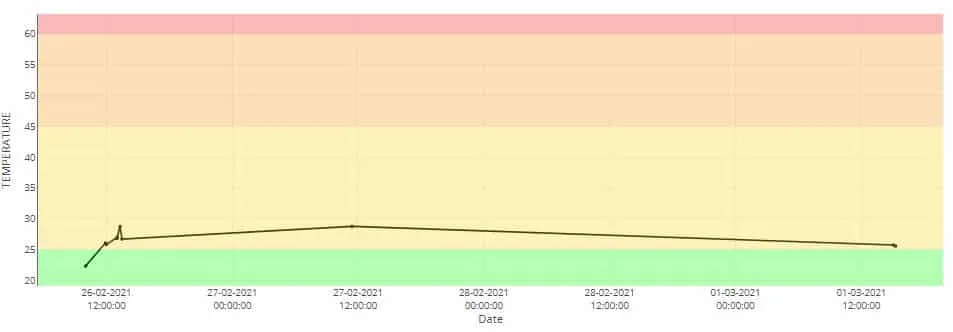
Technology significantly enhances Condition Monitoring by leveraging sensors as the eyes and ears of machines. These sensors, which can be tiny, perceptive devices, enable the feasibility of Online Monitoring. They are attached to the machines and maintain continuous vigilance over internal operations. Whenever unusual or concerning events unfold, these sensors send notifications, similar to receiving a message on a mobile phone. This capability empowers round-the-clock monitoring of machines, regardless of human presence. However, as these sensors collect information, they amass a wealth of data, comparable to accumulating numerous puzzle pieces. Yet, data alone lacks meaning; a mechanism is essential to piece together and decipher this information effectively. This is where technology assumes a pivotal role: Advanced software processes the data gleaned from the sensors, transforming it into actionable insights. This process resembles a detective skillfully solving a complex puzzle, providing us with a clear understanding of whether everything is functioning as expected or if there may be an underlying issue. In essence, technology, through sensors and data analysis, enables a proactive approach to maintenance, ensuring the early detection of potential problems in machines. This approach, often referred to as predictive maintenance artificial intelligence, represents the cutting edge of maintenance optimization. By leveraging Condition Monitoring and the latest technologies, industries can ensure their equipment remains in optimal condition, ultimately enhancing productivity and reducing costs. Condition Monitoring is a vital component of the modern asset maintenance process, ensuring industrial machine maintenance is both efficient and effective.
References
- Juan Carlos A. Jauregui Correa, Alejandro A. Lozano Guzman, in Mechanical Vibrations and Condition Monitoring, 2020
- Sait, A.S., Sharaf-Eldeen, Y.I. (2011). A Review of Gearbox Condition Monitoring Based on vibration Analysis Techniques Diagnostics and Prognostics.
Frequently asked questions
What is condition monitoring?
Condition monitoring is the practice of carefully watching parameters such as vibration, temperature, and current in machines. These parameters act as signals that tell you what is happening inside a machine and whether it may be developing a problem, which makes condition monitoring a crucial part of industrial machine maintenance.
What is the difference between online and offline condition monitoring?
Offline monitoring captures periodic snapshots with handheld tools and is used on machines that are not highly critical, but it needs skilled people and takes time. Online monitoring uses special sensors fixed to the machine that transmit data continuously, costs more, and suits machines that must run around the clock.
Which machines benefit most from condition monitoring?
Condition monitoring is most useful for rotating equipment and auxiliary systems such as compressors, pumps, and gearboxes. On these machines it gives particularly good insight into how they are performing.
What is the P-F curve?
The P-F curve maps the interval between potential failure (P), when a machine first shows signs that something might be wrong, and functional failure (F), when it is completely broken and can no longer do its job. For example, once bearing vibration passes a certain level it may still run for around 15 more days before total failure.
How do you implement condition monitoring?
Identify critical assets, choose suitable monitoring methods, install sensors and equipment, set up a data collection system, analyse the data for patterns and early failure signs, train the maintenance team, build a proactive maintenance plan around the thresholds detected, and keep improving the process as new technologies emerge.