
Replacing fixed cleaning schedules and reactive repairs with condition-based fan monitoring and automated planning cut unexpected fan failures by 90%, fan energy consumption by 18%, and total fan maintenance costs by 30% at one FMCG manufacturer. This article covers where traditional fan maintenance falls short, the monitoring and planning system that replaced it, the measured results, and the practices that made the transition work.
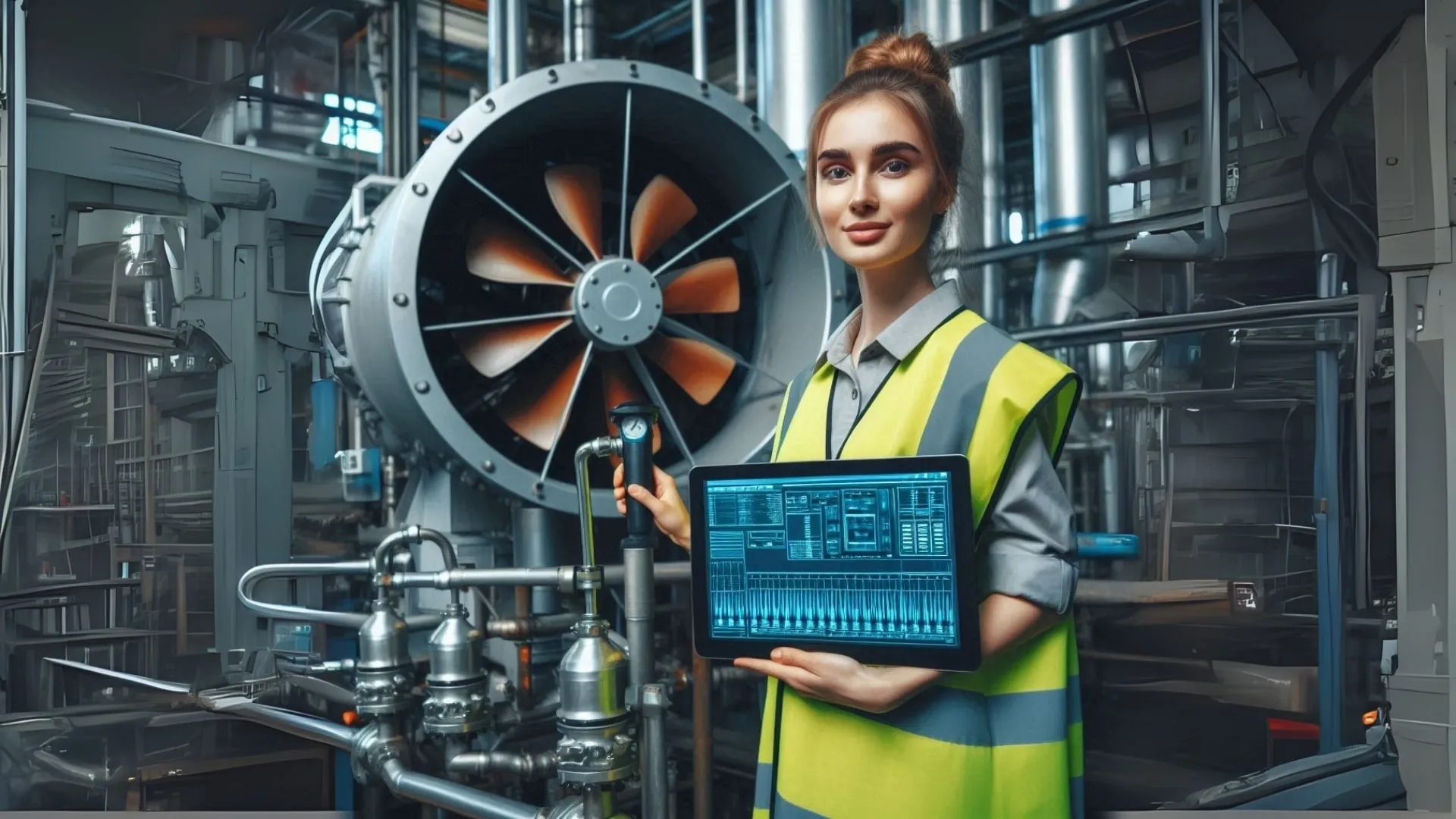
Industrial fans are the unsung heroes of manufacturing facilities, working tirelessly to maintain optimal air circulation, dust collection, material transfer, temperature control, and ventilation. Despite their critical role, fan maintenance often follows reactive or calendar-based approaches that can lead to unexpected failures, energy waste, and production disruptions. A major Fast-Moving Consumer Goods (FMCG) manufacturer recently discovered how condition-based monitoring and automated planning could revolutionize their fan maintenance strategy, delivering significant cost savings and operational improvements.
The Challenge: Traditional Fan Maintenance Falls Short
The FMCG facility operated over 100 industrial fans across multiple production lines, including large ventilation fans, cooling fans for equipment, and exhaust fans for process areas. Their traditional maintenance approach involved:
- Fixed scheduling: Cleaning fans every 3–6 months regardless of actual condition
- Reactive repairs: Addressing failures only after they occurred
- Manual inspections: Time-intensive visual checks that often missed early degradation signs
- Energy inefficiency: Dirty fans consuming 15–30% more energy than clean ones
This approach resulted in several costly problems:
- Unexpected fan failures during peak production periods
- Over-maintenance of fans in clean environments
- Under-maintenance of fans in harsh conditions
- Increased energy consumption across the facility
- Labor-intensive maintenance scheduling and execution
The Solution: Condition-Based Fan Monitoring
Partnering with Sensemore’s machine health platform, the company implemented a comprehensive fan monitoring system that tracks key performance indicators in real-time:
- Bearing health monitoring: Detecting early signs of bearing wear and lubrication issues
- Imbalance detection: Identifying fan blade contamination and structural problems
- Misalignment tracking: Monitoring shaft and coupling conditions
- Dust accumulation patterns: Understanding contamination rates in different facility areas
- Operating hours correlation: Linking runtime to maintenance needs
- Seasonal variations: Accounting for environmental changes affecting fan performance
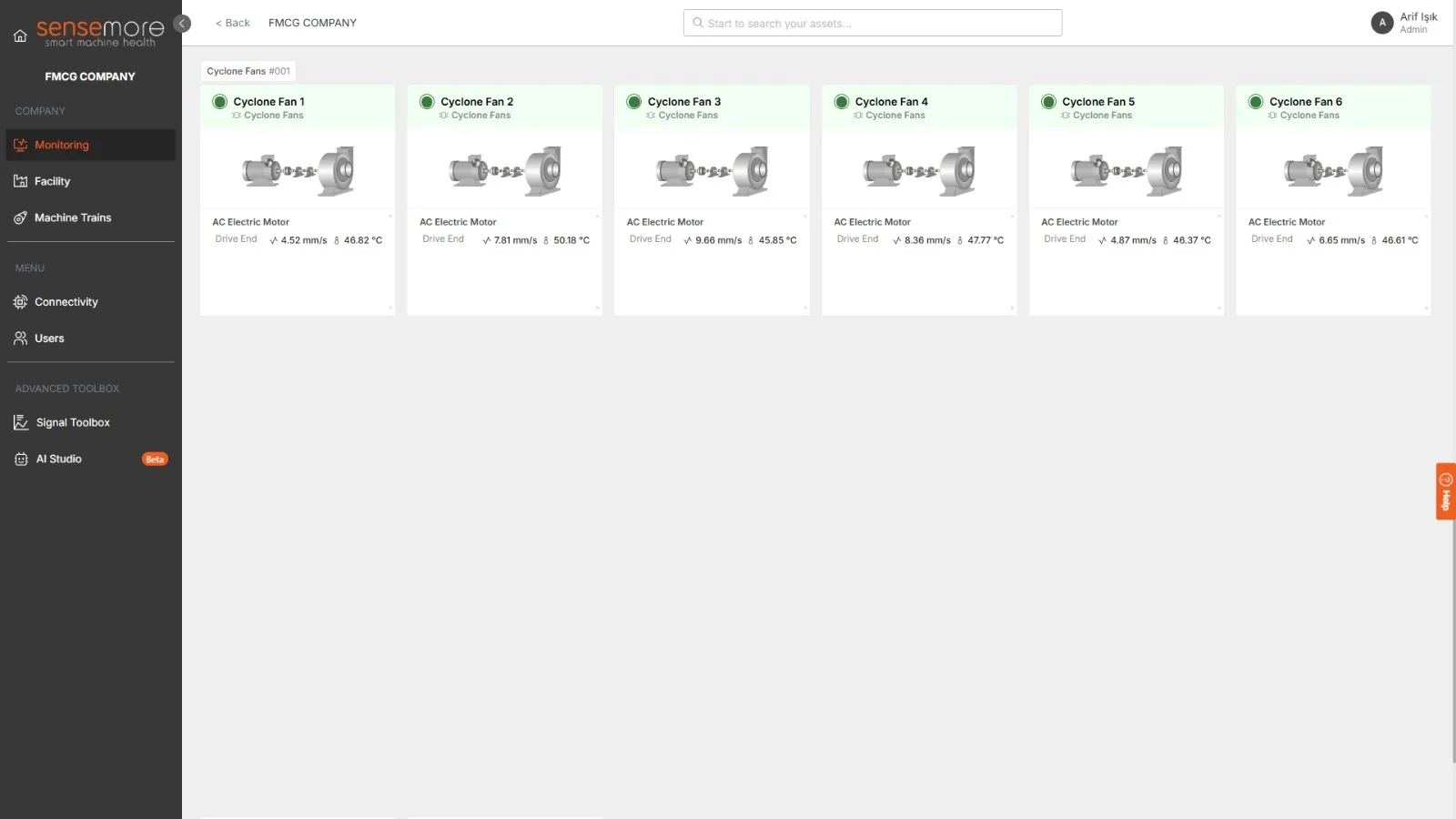
Automated Planning: From Data to Action
The monitoring system doesn’t just collect data, it transforms insights into actionable maintenance plans:
- Criticality to production: Essential fans receive priority attention
- Degradation rate: Rapidly degrading fans move up the schedule
- Energy impact: High-consumption fans are prioritized for early intervention
- Maintenance window availability: Schedules align with planned production downtimes
- Optimized sequencing to minimize downtime
- Coordination with other planned maintenance tasks
Real-World Results: Measurable Impact
Operational Improvements
- 90% reduction in unexpected fan failures
- 25% decrease in total maintenance labor hours
- 60% improvement in maintenance schedule adherence
- 35% reduction in emergency callouts
Energy Savings
- 18% average reduction in fan energy consumption
- $50,000 annual savings in electricity costs
- Enhanced overall energy efficiency metrics
Cost Benefits
- 30% reduction in total fan maintenance costs
- Extended equipment lifespan by 2–3 years on average
- Reduced spare parts inventory through better planning
- Lower insurance premiums due to improved reliability
Key Success Factors
- Comprehensive sensor deployment on critical fans
- Integration with existing building management systems
- Real-time data transmission and cloud-based analytics
- Customized machine learning models and adaptive thresholds
- Continuous algorithm refinement based on maintenance outcomes
- Training maintenance teams on new data-driven approaches
- Clear communication of benefits and ROI to all stakeholders
Implementation Best Practices
- Start with critical equipment to deliver early wins
- Establish performance baselines before implementing automation
- Involve maintenance teams in algorithm development and validation
- Plan for scalability to accommodate future expansion
The Future of Industrial Fan Maintenance
- AI-powered anomaly detection for earlier fault identification
- Predictive models incorporating weather, production schedules, and supply chain variables
- Integration with digital twins for system-wide optimization
Conclusion: The Smart Maintenance Advantage
The transformation achieved by this FMCG manufacturer illustrates the powerful potential of combining IoT monitoring with automated planning. By moving beyond traditional calendar-based maintenance to a truly condition-driven approach, organizations can unlock:
- Significant cost reductions through optimized timing
- Improved reliability and longer asset lifespan
- Enhanced energy efficiency and sustainability
- Better workforce productivity and resource utilization
Ready to optimize your industrial fan maintenance? Contact Sensemore to learn how our condition monitoring solutions can transform your maintenance operations and deliver substantial cost savings.
Frequently asked questions
Why is calendar-based fan maintenance inefficient?
Cleaning fans every three to six months regardless of their actual condition over-maintains fans in clean environments and under-maintains those in harsh conditions. It also leaves early degradation undetected, so fans still fail unexpectedly during peak production while dirty fans consume 15 to 30 percent more energy than clean ones.
What does condition-based fan monitoring measure?
It tracks bearing health for early wear and lubrication issues, imbalance that reveals blade contamination and structural problems, shaft and coupling misalignment, dust accumulation patterns across facility areas, the correlation between operating hours and maintenance needs, and seasonal variations in performance.
What results did the FMCG manufacturer achieve?
Unexpected fan failures fell by 90 percent, maintenance labour hours by 25 percent and emergency callouts by 35 percent, while schedule adherence improved by 60 percent. Fan energy consumption dropped 18 percent, saving 50,000 dollars a year in electricity, and total fan maintenance costs fell 30 percent.
How does automated planning decide which fan to service first?
Priority is set by criticality to production, the rate at which a fan is degrading, its energy impact, and the availability of a maintenance window that aligns with planned production downtime. Tasks are then sequenced to minimize downtime and coordinated with other planned maintenance.
How should a condition-based fan monitoring programme be started?
Begin with critical equipment to deliver early wins, establish performance baselines before automating anything, involve maintenance teams in developing and validating the algorithms, and plan for scalability so the system can accommodate future expansion.