
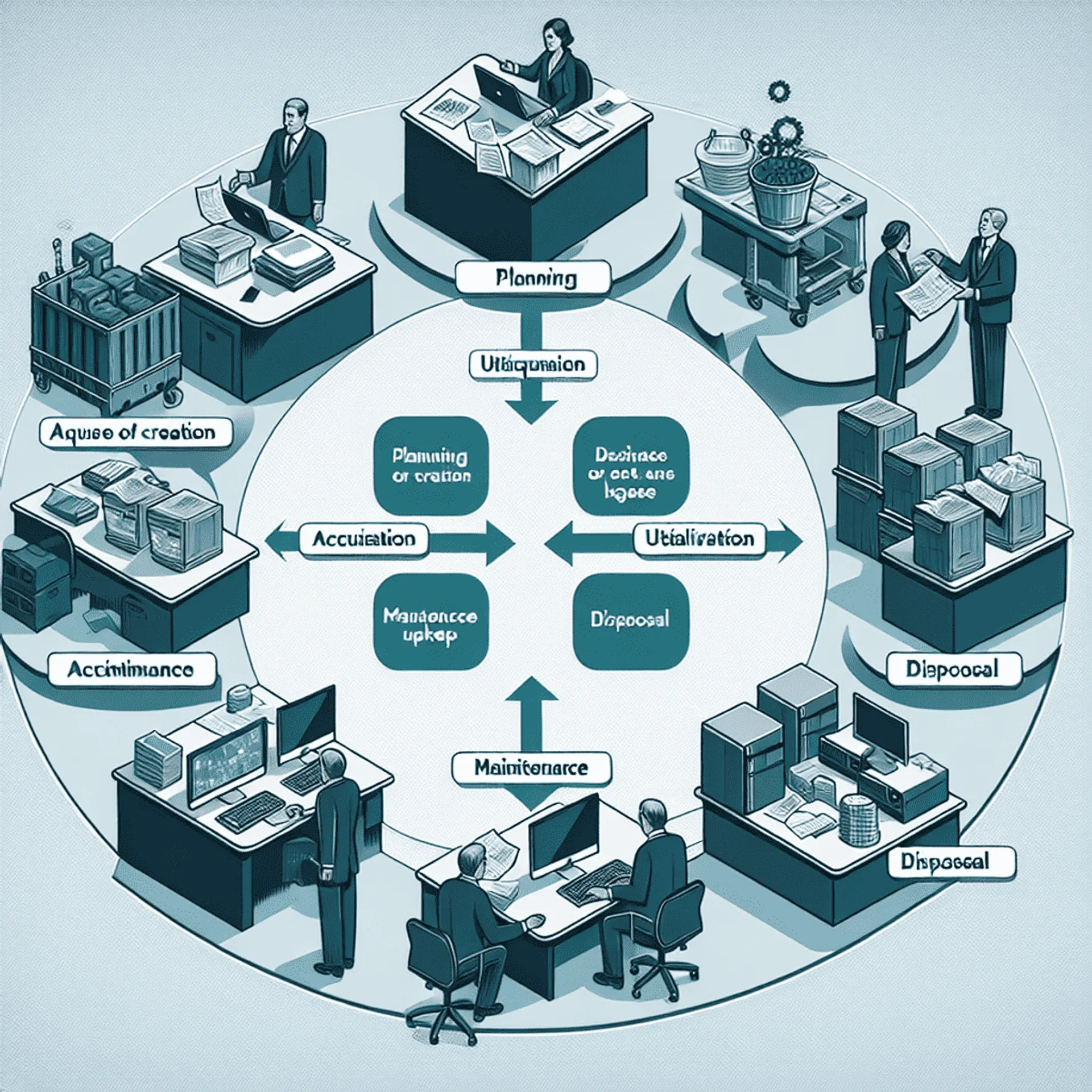
The asset lifecycle is the full sequence of stages an industrial asset passes through (acquisition, operation, health tracking, and renewal or disposal) each managed to ensure optimal performance, longevity, and return on investment. Organizations across industries rely on a diverse array of industrial assets to support their operations, ranging from machinery and equipment to infrastructure and facilities, and from the initial acquisition to eventual disposal, diligent management and strategic decision-making are essential to maximize asset value and minimize risks. This article walks through each stage of the lifecycle step by step and the practices that keep assets performing at every point.
Asset acquisition
Evaluating asset requirements
When acquiring industrial assets, organizations must first evaluate their specific requirements to ensure the chosen assets align with their operational needs. This involves considering factors such as capacity, functionality, and compatibility with existing infrastructure.
Sourcing and procurement
Once requirements are defined, organizations proceed with sourcing and procurement activities. This entails identifying potential suppliers, negotiating contracts, and selecting the most suitable assets based on factors like quality, cost, and delivery timelines.
Inspection and testing
Before finalizing the acquisition, thorough inspection and testing of the assets are essential to verify their quality, functionality, and compliance with safety standards. This helps mitigate risks associated with defective or substandard equipment.
Installation and commissioning
Upon successful procurement, assets undergo installation and commissioning processes to integrate them into the operational environment. Proper installation and commissioning are critical to ensure optimal performance and safety during asset operation.
Asset operation
Planned maintenance and repairs
During the operational phase, regular planned maintenance and timely repairs are essential to preserve asset functionality and prolong its lifespan. This involves adhering to maintenance schedules, conducting routine inspections, and addressing any identified issues promptly.
Condition monitoring and diagnostics
Implementing condition monitoring techniques enables organizations to assess the health and performance of assets in real-time. Through continuous monitoring and diagnostics, potential faults or deteriorations can be detected early, allowing for proactive maintenance interventions.
Performance optimization
Optimizing asset performance involves fine-tuning operational parameters and processes to enhance efficiency, productivity, and resource utilization. This may include adjusting settings, optimizing workflows, or implementing technology-driven solutions for process improvement.
Risk management
Effective risk management strategies are integral to asset operation, aiming to identify, assess, and mitigate potential risks that could impact asset performance or safety. This involves implementing preventive measures, contingency plans, and safety protocols to minimize risks and ensure operational resilience.
Asset health tracking
Physical inspections
Regular physical inspections are conducted to assess the condition of assets, identify any signs of wear or damage, and address maintenance needs. These inspections may involve visual assessments, measurements, and non-destructive testing techniques.
Sensor data and analytics
Utilizing sensors and data analytics tools enables organizations to collect and analyze real-time data on asset performance, health, and operational parameters. This facilitates predictive maintenance, performance optimization, and informed decision-making based on actionable insights.
Failure tracking
Tracking and analyzing asset failures provide valuable insights into failure patterns, root causes, and recurring issues. By understanding failure modes and trends, organizations can implement corrective actions, reliability improvements, and preventive maintenance strategies to mitigate future failures.
Reliability engineering
Reliability engineering principles are applied to design, operate, and maintain assets with a focus on maximizing reliability, availability, and maintainability. This involves identifying failure modes, conducting risk assessments, and implementing reliability-centered maintenance practices to enhance asset performance and longevity.
Asset renewal or disposal
Replacement planning
As assets reach the end of their useful life or become obsolete, organizations need to plan for their replacement or upgrade. This entails evaluating alternatives, considering technological advancements, and assessing the cost-benefit of replacement options.
Refurbishment/overhaul options
In some cases, refurbishment or overhaul of existing assets may be a viable alternative to replacement, offering cost-effective ways to extend their lifespan and improve performance. This involves refurbishing components, upgrading systems, and enhancing functionalities to meet current needs.
Retirement and disposal
When assets are no longer economically viable or safe to operate, they undergo retirement and disposal processes. This includes decommissioning, dismantling, recycling, or environmentally responsible disposal of assets in compliance with regulatory requirements and sustainability principles. This comprehensive overview highlights the key stages in the lifecycle of industrial assets and the various strategies employed by organizations to effectively manage assets throughout their useful lives, from acquisition to disposal. By implementing robust asset management practices, organizations can optimize asset performance, minimize risks, and achieve operational excellence.
Frequently asked questions
What is the asset lifecycle?
The asset lifecycle is the series of stages an industrial asset passes through from initial acquisition to eventual disposal. It covers acquisition, operation, health tracking, and renewal or disposal, with each stage managed to ensure optimal performance, longevity, and return on investment.
What are the stages of the asset lifecycle?
There are four main stages: asset acquisition, which covers evaluating requirements, sourcing and procurement, inspection and testing, and installation and commissioning; asset operation; asset health tracking; and asset renewal or disposal.
How is asset health tracked during operation?
Asset health is tracked through regular physical inspections, sensor data and analytics that provide real-time information on performance and condition, failure tracking to reveal patterns and root causes, and reliability engineering practices that maximize availability and maintainability.
When should an asset be replaced instead of refurbished?
Replacement planning starts when an asset reaches the end of its useful life or becomes obsolete, and involves evaluating alternatives, technological advancements, and the cost-benefit of each option. Refurbishment or overhaul can be a cost-effective alternative when upgrading components and systems extends the asset's lifespan and meets current needs.
What happens at the end of an asset's life?
When an asset is no longer economically viable or safe to operate, it goes through retirement and disposal. This includes decommissioning, dismantling, recycling, or environmentally responsible disposal in compliance with regulatory requirements and sustainability principles.