
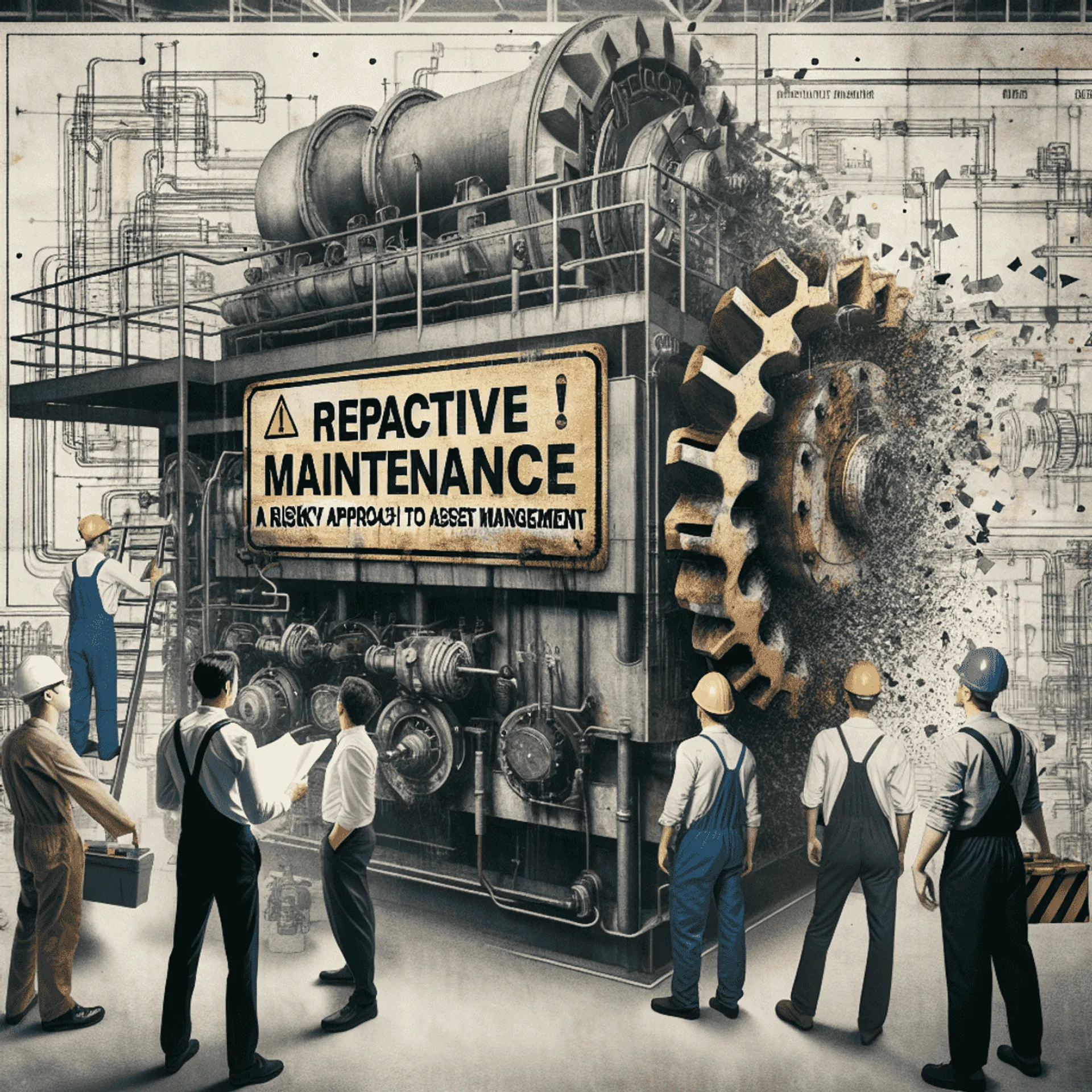
Reactive maintenance, also known as run-to-failure maintenance, is a methodology where assets are allowed to operate until they encounter a breakdown, which then prompts repair or maintenance actions. While appearing straightforward, this approach carries significant inherent risks that warrant careful consideration by asset managers and organizations alike. This article explains how reactive maintenance works, the advantages it offers, and the risks it creates.
How Reactive Maintenance Works
- Assets Are Operated Until Failure For reactive maintenance, assets are granted no preventive interventions, thus negating the implementation of scheduled maintenance or inspections. Instead, resources are utilized until a noticeable malfunction or breakdown occurs, at which point repair activities are initiated to rectify the issue. This reactive paradigm hinges on the principle of addressing issues only after they manifest, rather than proactively preventing them.
- “Run-to-failure” Approach A fundamental tenet of reactive maintenance is its adherence to the “run-to-failure” philosophy. Under this ethos, assets are continually utilized until they reach a state of complete failure. The overarching objective is to maximize the operational lifespan of an asset, extracting every ounce of value from it before conceding to its replacement. This strategy ostensibly minimizes upfront costs but poses inherent risks and long-term repercussions.
The Advantages of Reactive Maintenance
- Requires Less Staff and Planning One notable advantage of reactive maintenance is its demand for fewer personnel and logistical planning. Since there are no scheduled maintenance routines or inspections to coordinate, the burden on maintenance staff is significantly reduced. Additionally, the absence of proactive planning streamlines operational workflows, sparing management from intricate scheduling and resource allocation tasks.
- Lower Short-Term Costs From a financial perspective, reactive maintenance often presents lower short-term costs compared to proactive strategies. Expenses are predominantly confined to repairing failed components, sparing organizations from allocating significant resources towards preventive measures. Moreover, there’s minimal investment required in specialized maintenance tools or additional staff training, further minimizing immediate expenditures.
The Major Risks of Reactive Maintenance
- Increased Safety Hazards Despite its apparent cost-saving benefits, reactive maintenance introduces heightened safety hazards within operational environments. The reliance on assets reaching a state of failure before intervention increases the likelihood of unexpected shutdowns and accidents. Moreover, the sudden failure of critical components can create unsafe conditions for personnel, posing significant risks to their well-being and organizational liability.
- Costly Unplanned Downtime A notable risk associated with reactive maintenance is the potential for costly unplanned downtime. When assets fail unexpectedly, production processes grind to a halt until repairs are completed, resulting in significant revenue losses. The longer the downtime persists, the more pronounced the financial impact becomes, underscoring the importance of proactive maintenance strategies in mitigating such risks.
- Cascading Failures Reactive maintenance inherently predisposes assets to cascading failures, wherein the malfunction or breakdown of one component triggers failures in interconnected systems. This domino effect can exacerbate the severity of the initial issue, leading to more extensive damage and prolonged downtime. The ripple effects of cascading failures can permeate throughout an organization, amplifying operational disruptions and financial losses.
- Higher Total Lifetime Costs While reactive maintenance may offer apparent cost savings in the short term, it often incurs higher total lifetime costs compared to proactive strategies. The frequent need for repairs and replacements inevitably accumulates expenses over time, surpassing the upfront savings derived from deferred maintenance. Additionally, the premature failure of assets necessitates earlier replacements, further escalating long-term expenditures.
Concluding Thoughts: Weighing the Tradeoffs of Reactive Maintenance
In conclusion, reactive maintenance serves as a simplistic yet risky approach to physical asset management. While it may initially minimize short-term costs and logistical complexities, it exposes organizations to a myriad of operational, financial, and safety risks in the long run. As such, prudent asset managers must carefully evaluate the tradeoffs associated with reactive maintenance and consider adopting more proactive strategies to safeguard their assets and optimize their operational efficiency. By striking a balance between cost-effectiveness and risk mitigation, organizations can navigate the complexities of asset management with greater resilience and foresight.
Frequently asked questions
What is reactive maintenance?
Reactive maintenance, also called run-to-failure maintenance, is an approach in which assets are operated with no preventive interventions until a noticeable malfunction or breakdown occurs, at which point repair activities begin. Issues are addressed only after they manifest, rather than being prevented.
What does the run-to-failure approach mean?
Run-to-failure means assets are used continually until they reach a state of complete failure. The objective is to maximize an asset's operational lifespan and extract every bit of value from it before replacing it, which minimizes upfront costs but carries long-term repercussions.
What are the advantages of reactive maintenance?
It requires fewer personnel and less logistical planning, because there are no scheduled routines or inspections to coordinate. Short-term costs are also lower: spending is confined largely to repairing failed components, with minimal investment in specialized tools or extra staff training.
What are the main risks of reactive maintenance?
Four risks stand out: increased safety hazards from unexpected shutdowns and sudden component failures, costly unplanned downtime while production is halted for repairs, cascading failures in which one broken component triggers failures in interconnected systems, and higher total lifetime costs.
Is reactive maintenance cheaper in the long run?
No. Although it appears to save money in the short term, reactive maintenance often incurs higher total lifetime costs than proactive strategies, because frequent repairs and replacements accumulate over time and the premature failure of assets forces earlier replacements.