
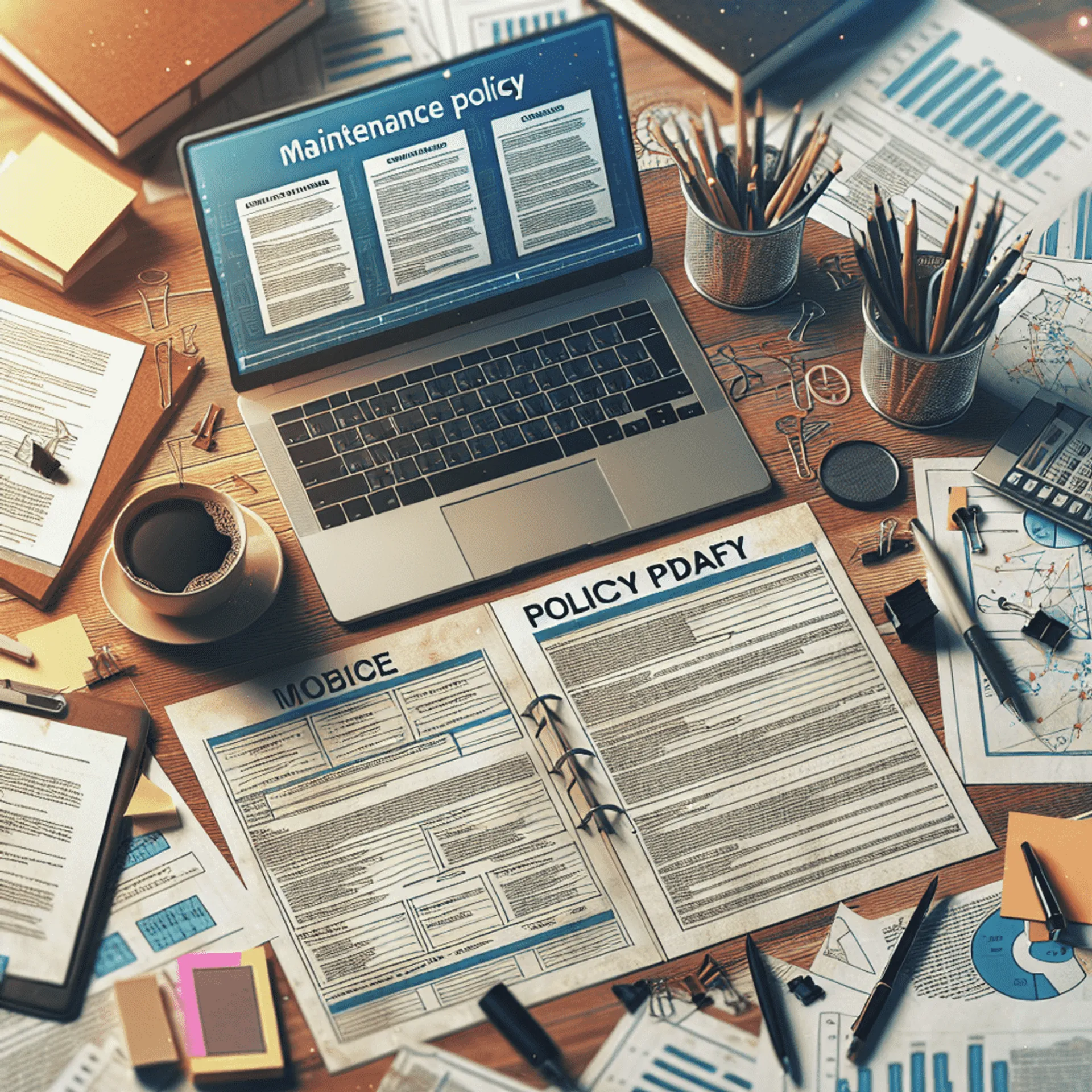
A maintenance policy is a comprehensive guideline for managing the upkeep of assets and equipment within an organization, setting the framework for maintenance activities so that performance, reliability and safety are assured. This article covers why such policies matter, the key steps in developing one, how to write and enforce it, and the benefits it delivers. In essence, it acts as the cornerstone of a well-structured maintenance strategy, providing clarity and direction to maintenance personnel.
The Significance of Maintenance Policies
Maintenance policies play a pivotal role in ensuring the effectiveness of maintenance strategies. By establishing clear guidelines and procedures, they enable organizations to maximize asset utilization, minimize downtime, and reduce costs associated with repairs and replacements. Moreover, they contribute to enhancing operational efficiency and safety, ultimately fostering a conducive working environment.
Key Steps in Developing a Maintenance Policy
- Define Objectives and Goals At the outset, it is essential to define the objectives and goals of the maintenance program. These could range from enhancing equipment reliability to minimizing breakdowns or optimizing maintenance costs. By clearly articulating the desired outcomes, organizations can align their maintenance efforts with broader business objectives.
- Assess Assets and Maintenance Requirements A thorough assessment of assets and maintenance requirements is crucial in formulating an effective maintenance policy. This involves evaluating the condition and criticality of assets, considering factors such as lifespan, usage patterns, and maintenance history. By understanding the unique needs of each asset, organizations can tailor their maintenance approach accordingly.
- Identify Maintenance Tasks and Frequencies Once assets have been assessed, the next step is to identify the specific maintenance tasks required and their frequencies. This entails determining preventive maintenance schedules, corrective actions, and predictive maintenance techniques. By establishing clear guidelines for maintenance activities, organizations can ensure timely interventions and minimize the risk of unplanned downtime.
- Assign Roles and Responsibilities Clarifying roles and responsibilities is essential for the successful implementation of a maintenance policy. This involves defining the duties of maintenance personnel, supervisors, and other stakeholders involved in the maintenance process. By assigning clear accountability, organizations can streamline communication and foster a culture of ownership towards maintenance goals.
- Establish Performance Metrics To gauge the effectiveness of the maintenance policy, it is essential to establish relevant performance metrics. These could include metrics such as mean time between failures (MTBF), mean time to repair (MTTR), and equipment availability. By tracking key performance indicators (KPIs), organizations can identify areas for improvement and optimize their maintenance processes.
Crafting an Effective Maintenance Policy
In crafting a maintenance policy, several key principles should be adhered to:
- Use Clear and Concise Language: The policy should be written in clear and easily understandable language to ensure comprehension by all stakeholders.
- Provide Sufficient Detail: Ensure that the policy provides comprehensive guidance on maintenance procedures, protocols, and standards.
- Align with Business Strategy: The maintenance policy should be aligned with the overall business strategy and objectives to ensure coherence and synergy across organizational functions.
- Define Procedures and Protocols: Clearly outline the procedures and protocols to be followed in carrying out maintenance activities, including reporting mechanisms and escalation procedures.
- Specify Record-Keeping and Reporting: Establish guidelines for record-keeping and reporting to ensure transparency and accountability in maintenance operations.
- Include Policy Review and Updates: Regularly review and update the maintenance policy to reflect changes in technology, regulations, and business priorities.
Implementing and Enforcing the Policy
Effective implementation and enforcement of the maintenance policy are critical for its success:
- Communicate the Policy: Ensure that the maintenance policy is effectively communicated to all relevant stakeholders, including maintenance personnel, supervisors, and management.
- Provide Training: Offer training programs to familiarize personnel with the maintenance policy, procedures, and protocols.
- Monitor Compliance: Monitor adherence to the maintenance policy through regular audits, inspections, and performance evaluations.
- Review and Revise as Needed: Continuously review and revise the maintenance policy to address emerging challenges, incorporate best practices, and adapt to changing business needs.
Benefits of a Well-Written Maintenance Policy
A well-written maintenance policy offers numerous benefits:
- Improves Efficiency: By providing clear guidelines and procedures, the maintenance policy streamlines maintenance operations, leading to improved efficiency and productivity.
- Reduces Costs: Effective maintenance practices outlined in the policy help minimize downtime, extend asset lifespan, and reduce maintenance-related expenses.
- Extends Asset Life: Regular maintenance activities prescribed in the policy contribute to prolonging the lifespan of assets, thereby maximizing their value and utility.
- Ensures Safety and Compliance: The policy includes provisions for ensuring safety standards and regulatory compliance, thereby mitigating risks and liabilities.
- Provides Guidance and Accountability: By establishing clear expectations and responsibilities, the maintenance policy provides guidance and accountability to all stakeholders involved.
Conclusion
In conclusion, developing an effective maintenance policy is essential for organizations seeking to optimize asset performance, minimize downtime, and reduce operational costs. By following the key steps outlined above and adhering to best practices in policy formulation and implementation, organizations can establish a robust maintenance framework that aligns with their business objectives and contributes to long-term success. It is imperative to recognize that maintenance policies are not static documents but should evolve in response to changing needs and priorities, ensuring their relevance and effectiveness in the ever-evolving business landscape.
Frequently asked questions
What is a maintenance policy?
A maintenance policy is a comprehensive guideline for managing the upkeep of an organization's assets and equipment. It sets the framework for maintenance activities so that performance, reliability and safety are assured, acting as the cornerstone of a well-structured maintenance strategy and giving maintenance personnel clarity and direction.
What are the key steps in developing a maintenance policy?
Define the objectives and goals of the maintenance program, assess the condition and criticality of assets and their maintenance requirements, identify the specific maintenance tasks and their frequencies, assign roles and responsibilities to everyone involved, and establish performance metrics to measure whether the policy is working.
What should a maintenance policy document contain?
It should use clear and concise language, provide sufficient detail on procedures, protocols and standards, align with the overall business strategy, define reporting mechanisms and escalation procedures, specify record-keeping and reporting guidelines, and include provision for regular review and updates.
Which metrics measure the effectiveness of a maintenance policy?
Relevant performance metrics include mean time between failures (MTBF), mean time to repair (MTTR) and equipment availability. Tracking these key performance indicators shows where maintenance processes can be improved and optimized.
How is a maintenance policy implemented and enforced?
Communicate the policy to all relevant stakeholders including maintenance personnel, supervisors and management; provide training on its procedures and protocols; monitor compliance through regular audits, inspections and performance evaluations; and review and revise it continuously as business needs and best practices change.