

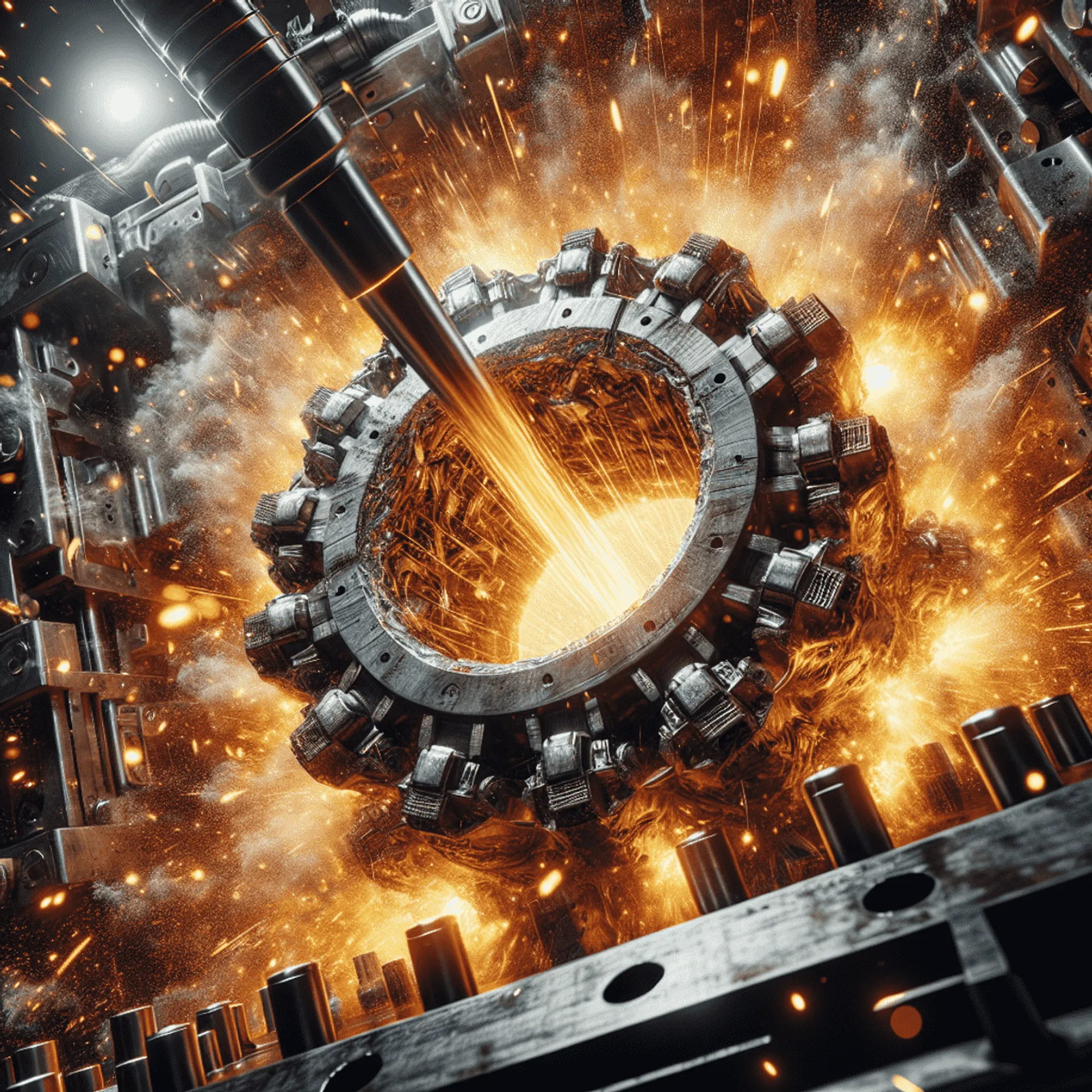
Destructive testing is the practice of loading a material or component specimen until it deforms or fails, in order to measure its true strength, toughness, hardness and durability: the specimen is destroyed, but the data it yields is not obtainable any other way. Despite the irreversible damage, this knowledge is pivotal for ensuring product quality, safety, and compliance with industry standards. This article explores the types of destructive testing, its applications, limitations, and considerations.
Types of Destructive Testing
- Tensile Testing Tensile testing is method for assessing the mechanical properties of materials, particularly their strength and elasticity. By subjecting specimens to pulling forces until failure occurs, tensile testing unveils crucial data regarding a material’s maximum load capacity, elongation, and modulus of elasticity.
- Impact Testing Impact testing evaluates a material’s resistance to sudden loading or shock by subjecting it to high-velocity impacts. This method involves striking the test specimen with a heavy pendulum or projectile, measuring the energy absorbed upon impact, and assessing the material’s toughness and ability to withstand dynamic loading conditions.
- Fatigue Testing Fatigue testing simulates real-world cyclic loading conditions to evaluate a material’s durability and propensity for failure over time. By subjecting specimens to repeated cycles of stress, fatigue testing helps identify potential failure modes, such as crack propagation and fracture, enabling engineers to design components with enhanced fatigue resistance.
- Hardness Testing Hardness testing quantifies a material’s resistance to indentation or penetration by a harder object, providing insights into its wear resistance, strength, and suitability for specific applications. Common hardness testing methods include the Rockwell and Brinell tests, which measure the material’s resistance to indentation under specified loads and conditions.
- Creep Testing Creep testing assesses a material’s deformation over time when subjected to a constant load or stress at elevated temperatures. This method helps engineers understand a material’s long-term behavior under sustained loading conditions, crucial for applications in high-temperature environments where creep deformation can compromise structural integrity.
Applications of Destructive Testing
- Metals and Alloys Destructive testing plays a vital role in the assessment of metals and alloys, providing essential data for engineering design and quality assurance. Whether it’s steel for structural applications or aluminum for aerospace components, destructive testing helps ensure the mechanical integrity and reliability of metallic materials in various industries.
- Plastics and Polymers In the realm of plastics and polymers, destructive testing aids in material selection, quality control, and performance optimization. Whether testing thermoset materials for electrical insulation or thermoplastics for injection molding applications, destructive testing provides critical insights into the mechanical properties and behavior of polymeric materials.
- Composites Composite materials, composed of two or more constituents with distinct properties, undergo rigorous destructive testing to assess their strength, durability, and interlaminar properties. Whether it’s fiber-reinforced composites for aerospace structures or ceramic matrix composites for high-temperature applications, destructive testing plays a crucial role in ensuring the reliability and performance of composite materials.
Limitations and Considerations
- Destructiveness One of the primary limitations of destructive testing is the irreparable damage inflicted upon test specimens, rendering them unusable for further evaluation or analysis. This aspect necessitates careful consideration of sample size and allocation, especially when dealing with limited resources or rare materials.
- Cost Destructive testing can incur significant costs, including material procurement, specimen preparation, and testing equipment. Moreover, the need for multiple specimens to obtain statistically significant results further adds to the overall expenditure, making destructive testing a substantial investment for organizations and research institutions.
- Test Parameters Small variations in test parameters, such as loading rate, temperature, and specimen geometry, can profoundly impact test results and subsequent data interpretation. It is imperative to standardize testing procedures, adhere to established protocols, and implement quality control measures to minimize experimental variability and ensure reliable test outcomes.
Conclusion
Despite its limitations and associated costs, the insights gained from destructive testing are invaluable for engineering design, product development, and regulatory compliance across diverse industries. By understanding the types, applications, and considerations of destructive testing, engineers and researchers can make informed decisions and ensure the integrity and reliability of materials and components in their respective fields.
Frequently asked questions
What is destructive testing?
Destructive testing is a method of evaluating materials and components by loading test specimens until they deform or fail, which yields insight into their durability, reliability and performance. The specimens are irreversibly damaged, but the resulting knowledge is pivotal for product quality, safety and compliance with industry standards.
What are the main types of destructive testing?
The main types are tensile testing for strength and elasticity, impact testing for resistance to sudden loading or shock, fatigue testing for durability under repeated cycles of stress, hardness testing for resistance to indentation, and creep testing for deformation over time under a constant load at elevated temperatures.
Which materials are assessed with destructive testing?
Metals and alloys, from structural steel to aerospace aluminium, are assessed for mechanical integrity and reliability. Plastics and polymers are tested for material selection, quality control and performance optimisation, and composite materials undergo rigorous testing for strength, durability and interlaminar properties.
What are the limitations of destructive testing?
The test specimens are irreparably damaged and cannot be used for further evaluation, so sample size and allocation need careful thought. The method is also costly because of material procurement, specimen preparation, testing equipment and the number of specimens needed for statistically significant results.
Why do destructive test results vary?
Small variations in test parameters such as loading rate, temperature and specimen geometry can profoundly affect results and how the data is interpreted. Standardised procedures, established protocols and quality control measures are needed to minimise experimental variability and produce reliable outcomes.