
Conveyor maintenance is the routine inspection, lubrication, alignment, cleaning and fastening work that keeps a conveyor system running, and it is what prevents unexpected downtime, extends equipment lifespan and improves operational efficiency. Conveyors are vital components in various industries, facilitating the movement of materials efficiently and continuously. This article covers why maintenance matters, the tasks to perform, when to schedule them, the safety precautions involved, and what to document.
Prevent Unexpected Downtime
Regular maintenance helps identify and address potential issues before they escalate into major problems, minimizing the risk of unexpected downtime. By conducting routine inspections and addressing minor repairs promptly, businesses can ensure uninterrupted operation of their conveyor systems.
- Extend Equipment Lifespan Conveyor systems are subjected to significant wear and tear during operation. Regular maintenance, including lubrication, cleaning, and component inspection, helps reduce friction, minimize wear, and prolong the lifespan of critical components such as belts, rollers, and bearings.
- Improve Efficiency Properly maintained conveyors operate more efficiently, resulting in smoother material handling processes and optimized workflow. By keeping belts properly tensioned, rollers aligned, and components well-lubricated, businesses can enhance the overall performance of their conveyor systems, leading to increased productivity and reduced operating costs.
Maintenance Tasks to Perform
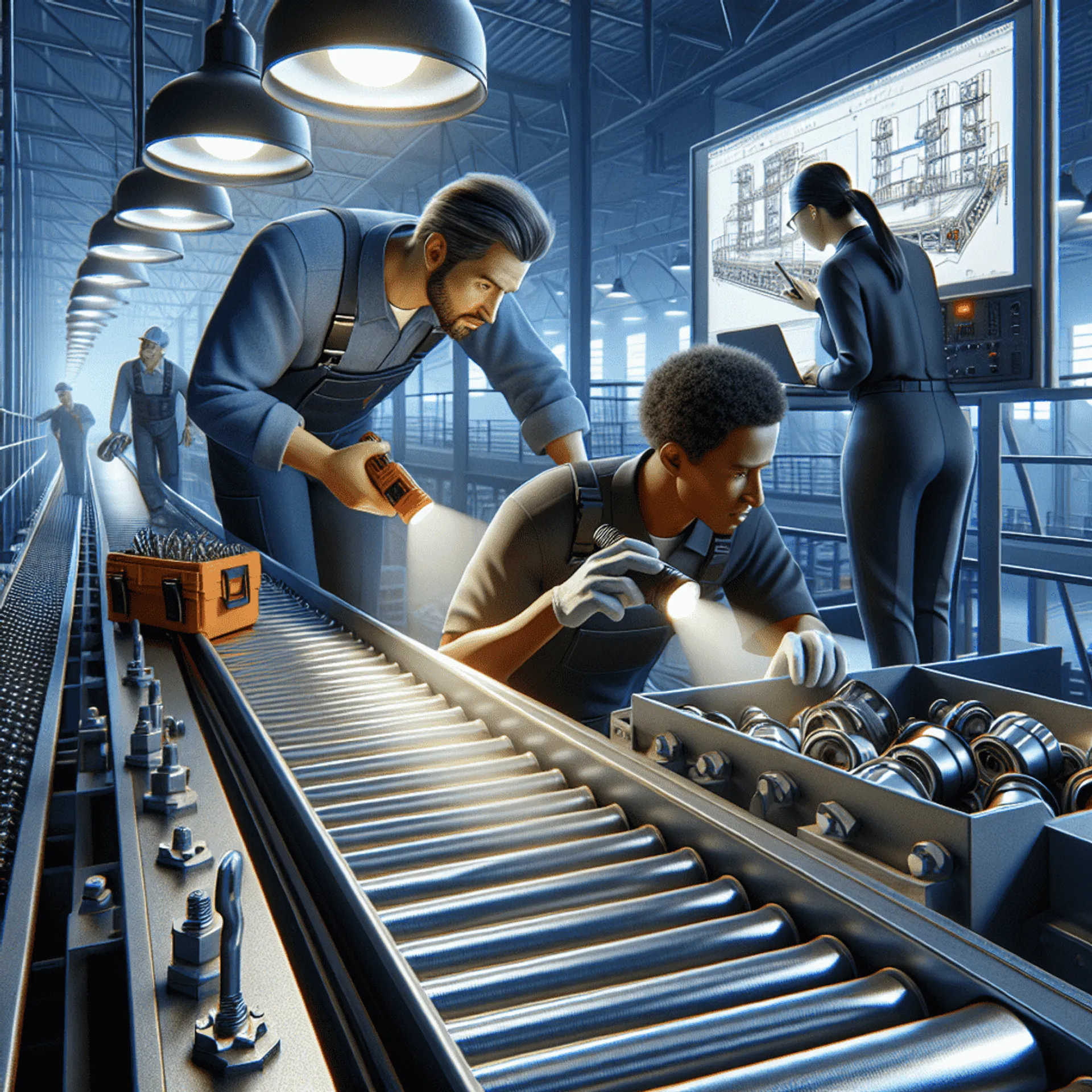
- Inspect Belts and Rollers Regular inspections of conveyor belts and rollers are crucial to detect signs of wear, damage, or misalignment. Visual inspections should be conducted regularly, with particular attention paid to belt tension, tracking, and any signs of fraying, cracking, or uneven wear on the surface.
- Lubricate Parts Proper lubrication of conveyor components such as bearings, chains, and sprockets is essential to reduce friction, prevent corrosion, and ensure smooth operation. Lubricants should be applied according to manufacturer recommendations, taking into account factors such as load, speed, and operating conditions.
- Check Alignment Misaligned conveyor components can lead to uneven wear, increased friction, and potential damage to the system. Regular alignment checks should be performed to ensure that belts, rollers, pulleys, and other components are properly aligned and adjusted to maintain optimal performance.
- Clean Equipment Keeping conveyor equipment clean is essential to prevent buildup of debris, dust, and contaminants that can interfere with operation and cause premature wear. Regular cleaning should include removal of accumulated debris from belts, rollers, and other components, as well as cleaning of surrounding areas to maintain a clean and safe work environment.
- Tighten Bolts and Fasteners Vibration and constant movement can cause bolts, fasteners, and other connections to become loose over time. Regular inspections should include checking for loose or missing bolts and fasteners and tightening them as needed to ensure structural integrity and prevent potential hazards.
When to Schedule Maintenance
- According to Manufacturer Recommendations Manufacturers provide guidelines and recommendations for maintenance intervals based on factors such as equipment type, operating conditions, and expected lifespan. Following manufacturer recommendations ensures that maintenance tasks are performed at appropriate intervals to maximize equipment performance and longevity.
- Based on Run Time Monitoring conveyor run time can help businesses schedule maintenance more effectively, ensuring that tasks are performed before components reach the end of their service life or begin to exhibit signs of wear or deterioration. Tracking run time allows for proactive maintenance planning and minimizes the risk of unexpected failures.
- After Noticing Problems Prompt attention to any signs of abnormal operation or performance issues is essential to prevent minor problems from escalating into major failures. If unusual noises, vibrations, or other symptoms are observed during operation, maintenance should be scheduled immediately to identify and address the underlying cause.
Safety Precautions
- Lockout/Tagout Procedures Conveyor maintenance often requires workers to perform tasks such as inspection, cleaning, and repairs in close proximity to moving parts and equipment. Lockout/tagout procedures should be followed to ensure that energy sources are isolated and equipment is safely de-energized before maintenance activities begin, preventing accidental startup and minimizing the risk of injuries.
- Personal Protective Equipment Workers performing conveyor maintenance tasks should wear appropriate personal protective equipment (PPE) to minimize the risk of injuries. This may include safety glasses, gloves, hearing protection, and high-visibility clothing, depending on the specific hazards associated with the maintenance activities being performed.
Documentation
- Keep Maintenance Logs Maintaining detailed records of maintenance activities, including inspections, repairs, and replacements, is essential for tracking equipment performance, identifying trends, and ensuring compliance with manufacturer recommendations and regulatory requirements. Maintenance logs should be kept up-to-date and easily accessible for reference.
- Note Repairs and Replacements Documentation should include thorough documentation of any repairs or replacements performed on conveyor systems, including details such as the date, nature of the work, parts replaced, and any additional observations or recommendations. This information helps track the history of maintenance and informs future decision-making regarding equipment upkeep and replacement.
Conclusion
Proper maintenance of conveyor systems is essential to protect uptime, extend equipment lifespan, and optimize operational efficiency. By following recommended maintenance tasks, scheduling routine inspections, and adhering to safety protocols, businesses can minimize the risk of unexpected downtime and costly repairs, ensuring continued productivity and maximizing their return on investment. For major repairs or upgrades, it is advisable to consult with experienced professionals to ensure the best possible outcomes and long-term reliability of conveyor systems.
Frequently asked questions
Why is conveyor maintenance important?
Regular conveyor maintenance prevents unexpected downtime by catching issues before they escalate, extends equipment lifespan by reducing friction and wear on belts, rollers and bearings, and improves efficiency through smoother material handling. Together these lower operating costs and protect productivity.
What maintenance tasks does a conveyor system need?
The core tasks are inspecting belts and rollers for wear, damage or misalignment, lubricating bearings, chains and sprockets, checking the alignment of belts, rollers and pulleys, cleaning away debris and contaminants, and tightening bolts and fasteners loosened by vibration and constant movement.
How often should conveyor maintenance be scheduled?
Follow the manufacturer's recommended intervals, which account for equipment type, operating conditions and expected lifespan. Supplement this by tracking run time so tasks happen before components reach the end of their service life, and schedule maintenance immediately whenever unusual noises, vibrations or other performance symptoms appear.
What safety precautions apply to conveyor maintenance?
Lockout/tagout procedures must be followed so energy sources are isolated and the equipment is de-energised before work begins, preventing accidental startup. Workers should also wear appropriate personal protective equipment, which may include safety glasses, gloves, hearing protection and high-visibility clothing depending on the hazards involved.
Why should conveyor maintenance be documented?
Detailed maintenance logs of inspections, repairs and replacements make it possible to track equipment performance, identify trends and demonstrate compliance with manufacturer recommendations and regulatory requirements. Recording the date, nature of the work and parts replaced also informs future decisions about upkeep and replacement.