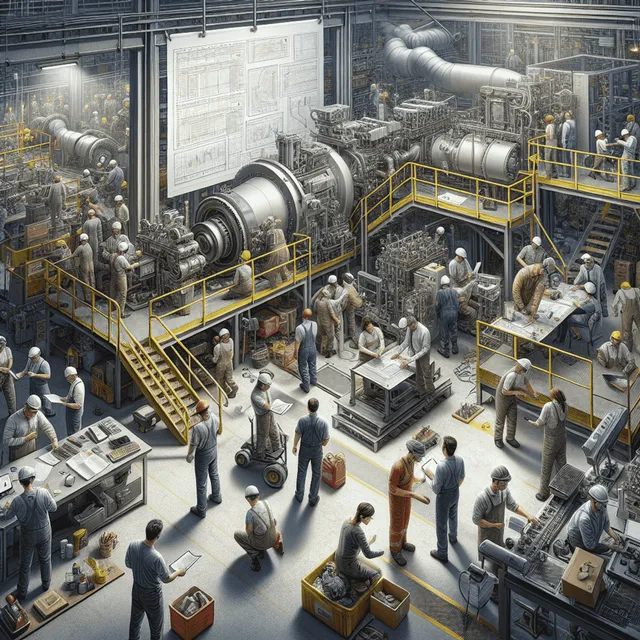


Predictive maintenance (PdM) uses advanced technologies to continuously monitor equipment and predict its performance, which reduces failures, shortens repair times, extends asset life and improves safety. This article explores those advantages in depth, covering its role in reducing equipment failures, decreasing Mean Time to Repair (MTTR), increasing asset lifetime, providing precise asset data, verifying repair efficacy, improving workplace safety, and boosting Return on Investment (ROI).
Reduced Equipment Failures
Predictive maintenance stands as a formidable solution in significantly reducing the incidence of sudden machine failures, a common challenge faced by organizations. By utilizing sophisticated condition monitoring techniques, predictive maintenance demonstrates a remarkable reduction in unexpected breakdowns, surpassing the 50% mark. This not only mitigates risks associated with over-maintenance or under-maintenance but also ensures a more balanced and optimized maintenance strategy.
| Maintenance Strategy | Equipment Failure Reduction | Risk of Over-Maintenance | Risk of Under-Maintenance |
|---|---|---|---|
| Predictive Maintenance | Over 50% | Minimal | Minimal |
| Preventive Maintenance | Moderate | High | Moderate |
| Reactive Maintenance | Limited | Minimal | High |
Table 1: Comprehensive Comparison of Maintenance Strategies
Decreased Mean Time to Repair (MTTR)
The early detection capabilities inherent in predictive maintenance has an impact on minimizing the Mean Time to Repair (MTTR). As condition monitoring sensors promptly identify emerging issues, maintenance technicians can proactively address problems before they escalate. This proactive approach results in an impressive average MTTR reduction of 60%, translating into not only improved operational efficiency but also minimized disruptions and downtime.
Increased Asset Lifetime
The utilization of machine learning in predictive maintenance contributes significantly to the extension of the service life of machinery. Organizations embracing predictive maintenance witness an average increase of up to 30% in the lifespan of their assets. This underscores the long-term benefits of adopting predictive maintenance strategies, making it a key player in the quest for sustainable and efficient industrial operations.
| Industry | Asset Lifetime Extension with Predictive Maintenance |
|---|---|
| Manufacturing | 30% |
| Automotive | 25% |
| Facilities | 28% |
Table 2: Asset Lifetime Extension Attributable to Predictive Maintenance
Precise Asset Data
An essential advantage of predictive maintenance lies in its ability to leverage sensor data for precise predictions regarding Mean Time Between Failures (MTBF). This data empowers maintenance managers to make well-informed decisions regarding the most cost-effective timing for machinery replacement.
| Advantage | Description |
|---|---|
| Optimal Replacement Timing | Determine the most cost-effective time to replace machinery, avoiding unnecessary maintenance expenses. |
| Cost-Efficient Decision-Making | Algorithms help in evaluating maintenance and continuing operation costs against replacement costs. |
| Historical Data Analysis | Track and analyze historical data to identify patterns, optimizing decision-making for future maintenance. |
Table 3: Advantages of Precise Asset Data
Verification of Repair Efficacy
Predictive maintenance sensors play a crucial role in conducting various analyses such as vibration analysis, oil analysis, thermal imaging, and equipment observation. Beyond detecting issues, these sensors verify the success of repairs before machines restart. This validation mechanism eliminates the need for repeat repairs and additional shutdowns, significantly increasing operational efficiency.
| Analysis Technique | Purpose | Benefits |
|---|---|---|
| Vibration Analysis | Detect mechanical issues in rotating equipment | Early detection of potential failures |
| Oil Analysis | Assess the condition of lubricants and identify contaminants | Extend equipment life and reduce downtime |
| Thermal Imaging | Identify abnormal temperature patterns in equipment | Early detection of electrical and mechanical issues |
| Equipment Observation | Direct visual inspection of equipment in operation | Verification of overall equipment health |
Table 4: Analysis Techniques in Predictive Maintenance
Improved Workplace Safety
The early detection of equipment and maintenance problems through predictive maintenance contributes significantly to the enhancement of workplace safety. By identifying potential hazards before they escalate into critical failures, organizations can proactively address safety concerns. Beyond the ethical imperative of ensuring a safe working environment, several insurance companies incentivize organizations with established predictive maintenance programs, recognizing the significant impact on mitigating safety hazards and preventing accidents.
| Aspect | Impact |
|---|---|
| Accident Prevention | Identification of potential hazards before incidents |
| Safety Compliance | Adherence to safety standards and regulations |
| Employee Well-being | Reduction in workplace accidents and injuries |
| Insurance Incentives | Recognition and incentives from insurance providers |
Table 5: Impact on Workplace Safety
Increased Return on Investment (ROI)
The advantages of predictive maintenance extend beyond the direct reduction in downtime, encompassing indirect cost savings that contribute to an increased Return on Investment (ROI). Organizations witness a decrease in overall maintenance tool and service investments, resulting in a significant boost to their ROI. Leveraging Internet of Things (IoT) technology, automates data collection, freeing up time for maintenance managers to focus on vital tasks.
| Aspect | Impact |
|---|---|
| Reduced Downtime | Direct savings through minimized disruptions and breakdowns. |
| Cost-Efficient Maintenance | Indirect savings by investing less in maintenance tools and services. |
| Increased Work Productivity | Maintenance teams can allocate more time to crucial tasks, enhancing overall productivity. |
| Improved Asset Utilization | Enhanced efficiency and performance contribute to optimal asset utilization. |
Table 6: ROI Impact of Predictive Maintenance
Comparison with Traditional Maintenance Strategies
| Maintenance Strategy | Advantages |
|---|---|
| Predictive Maintenance | Reduces equipment failures, decreases MTTR, extends asset lifetime, and enhances safety. |
| Preventive Maintenance | Offers moderate reduction in breakdowns but may lead to over-maintenance. |
| Reactive Maintenance | Provides limited advantages and comes with the high cost of unscheduled downtime. |
Table 7: Comparative Analysis of Maintenance Strategies
Conclusion
In conclusion, the advantages and benefits of predictive maintenance are paramount for organizations seeking to optimize operational efficiency. From reducing equipment failures to improving workplace safety, the impact of predictive maintenance resonates across various aspects of industrial operations. As industries evolve towards embracing smart technologies, predictive maintenance stands out as a cornerstone for ensuring sustained efficiency and longevity of assets. Organizations are encouraged to explore and adopt predictive maintenance to stay ahead in the ever-changing landscape of industrial maintenance, fostering a future where disruptions are minimized, assets are optimized, and efficiency is elevated to new heights.
Frequently asked questions
What are the main benefits of predictive maintenance?
Predictive maintenance reduces equipment failures, shortens the Mean Time to Repair, increases asset lifetime, provides precise asset data, verifies that repairs worked, improves workplace safety and raises the return on investment.
How much does predictive maintenance reduce equipment failures?
Sophisticated condition monitoring techniques deliver a reduction in unexpected breakdowns that surpasses the 50% mark, while also limiting the risks of both over-maintenance and under-maintenance.
How does predictive maintenance affect Mean Time to Repair?
Condition monitoring sensors identify emerging issues promptly, so technicians can address problems before they escalate. This proactive approach results in an average MTTR reduction of 60%, which means less disruption and less downtime.
Does predictive maintenance extend the life of equipment?
Yes. Organisations that use machine learning within predictive maintenance see an average increase of up to 30% in the lifespan of their assets: 30% in manufacturing, 25% in automotive and 28% in facilities.
How does predictive maintenance improve workplace safety?
Detecting equipment and maintenance problems early lets organisations address potential hazards before they escalate into critical failures. Several insurance companies also offer incentives to organisations with established predictive maintenance programmes in recognition of that reduced risk.