
The Sensemore Maintenance Bot has been retired. What it did, telling a maintenance team that a machine had moved outside its normal behaviour, now belongs to the Sensemore Reliability Agent inside LAKE, which does not stop at the alert: it works the case, verifies what it finds, and comes back with a diagnosis, the evidence behind it and a proposed action. Below is what the bot was, why the notification turned out to be the easy half of the problem, and what took its place.
What the Maintenance Bot Was
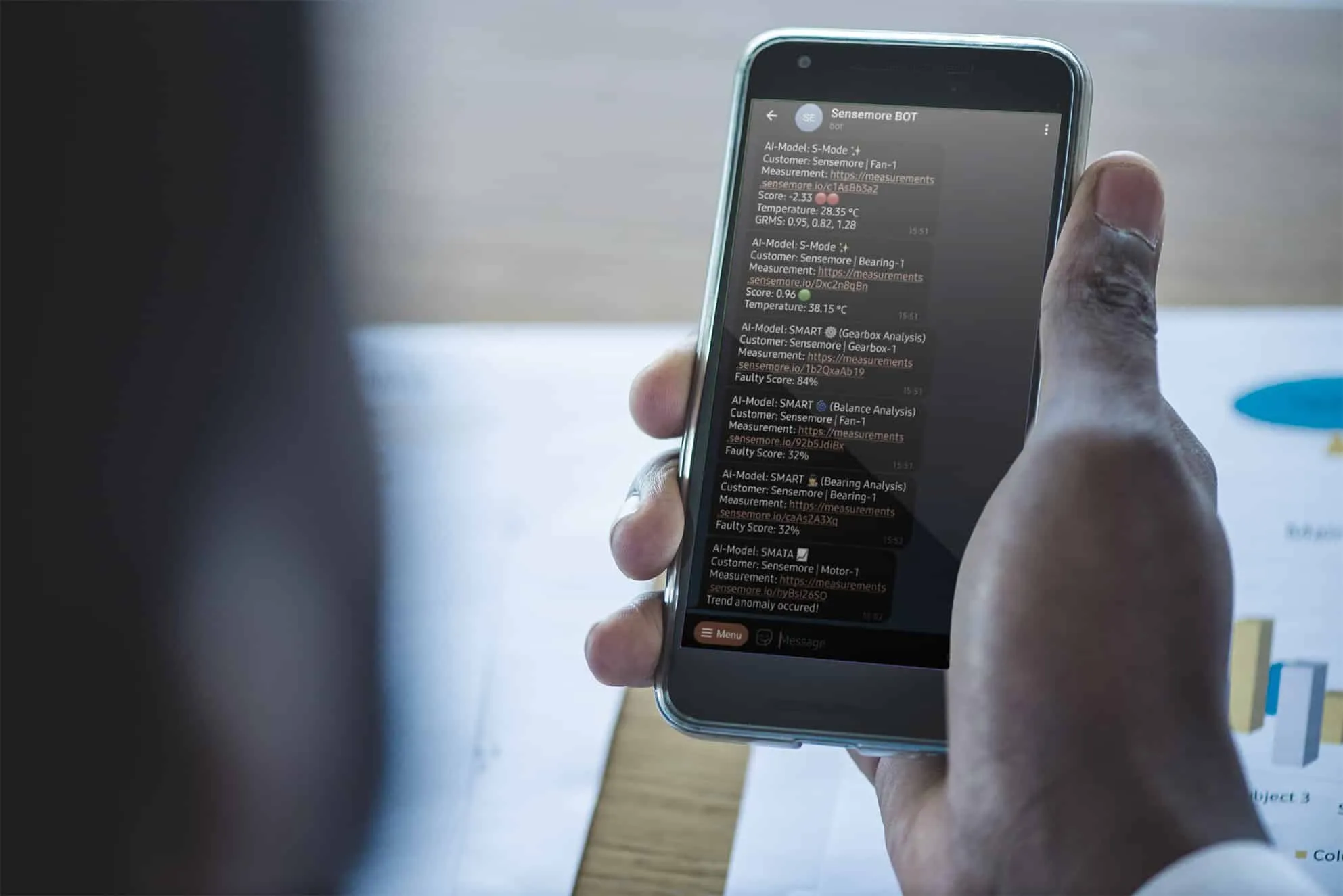
It launched in January 2023 as a beta, and it lived on Telegram. Sensemore’s own predictive maintenance algorithms ran over the sensor data behind it, machine mode analysis, a trend type detector, a faulty detector and a trend predictor, and when a machine ran outside its normal parameters the bot pushed a notification: which machine, where it stood, and what might be behind it.
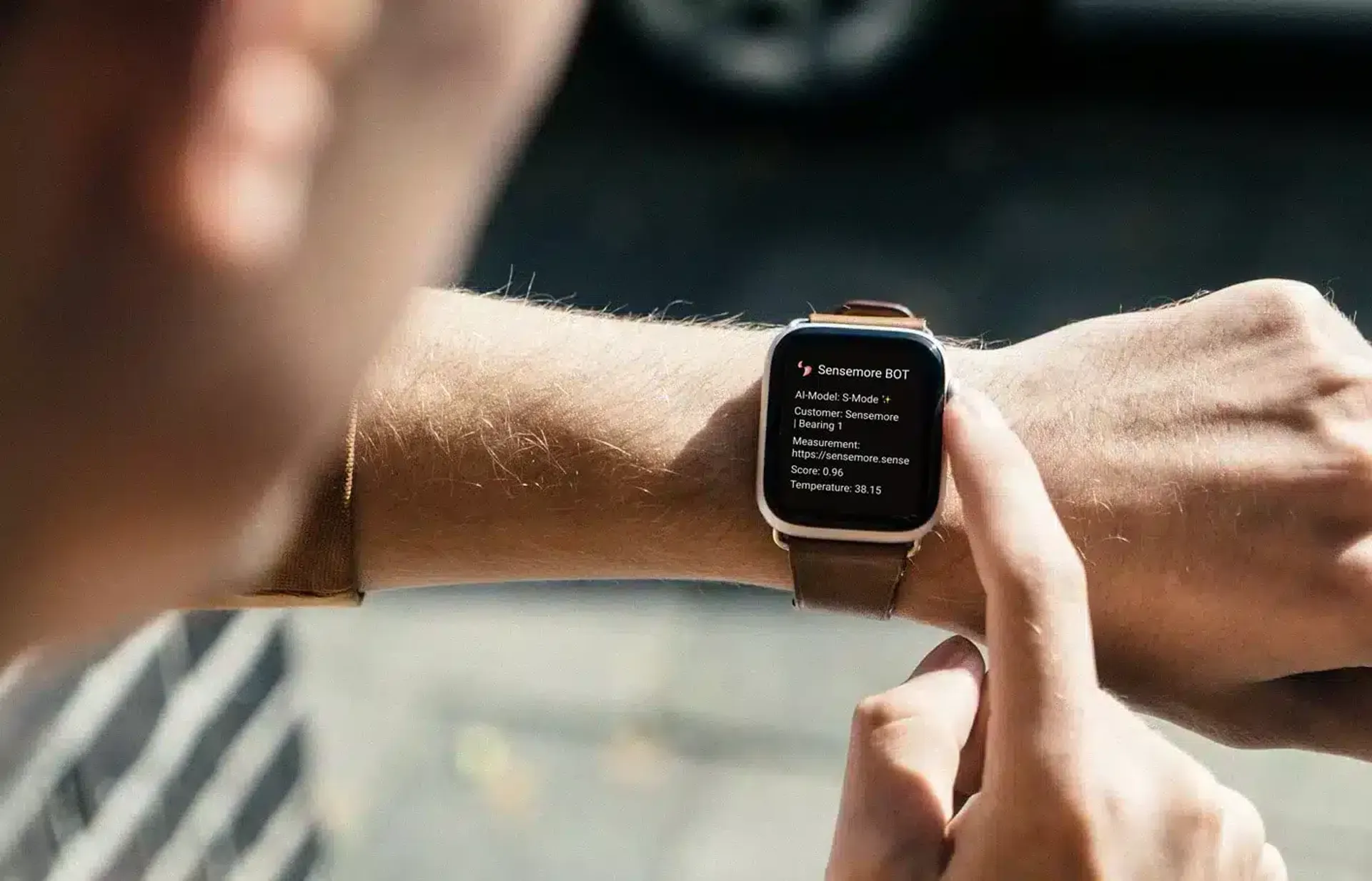
A handful of chat commands gave a quick look at a measurement point without opening a laptop, and because it was a messaging app the alert could reach a smartwatch. Anything past that quick look sent you to the platform.
Why the Alert Was the Easy Half
An alert tells you that something changed. It does not tell you what is wrong, and it does not tell you what to do about it, and that gap is where the work actually sits.
A rise at running speed in the radial direction could be imbalance. It could also be a soft foot, or the secondary damage left by something that failed a month earlier. One measurement cannot separate those, so somebody still had to open the platform, pull the spectrum, put it next to the machine’s history and decide. The notification saved the checking, not the diagnosis.
The bot also stood outside the platform, which cost it two things. It had no memory of the last time that machine was looked at, so every alert started from nothing. And nothing it concluded could be carried into a work order, so the finding and the job that came out of it lived in different places.
What Took Its Place
The Sensemore Reliability Agent sits inside LAKE. You pick a machine, or ask it to review the whole facility, and put the question the way you would to a colleague.
The order it works in is the point. It checks the structure before it blames the mechanics, because a resonance and a bearing fault are different problems wearing the same symptom. Then it compares against a month ago rather than judging a single reading, which is what separates a root cause from the damage it caused.
It reads the machine’s own documents and nameplate to find out what is actually installed, and it draws on Sensemore’s reliability knowledge base of standards, bearing catalogues and past cases. A theoretical fault frequency that lands on a measured peak is a much stronger statement than a peak on its own. When it suspects something it follows the suspicion until it confirms or rules it out, and it verifies a finding before putting it in front of you rather than after.
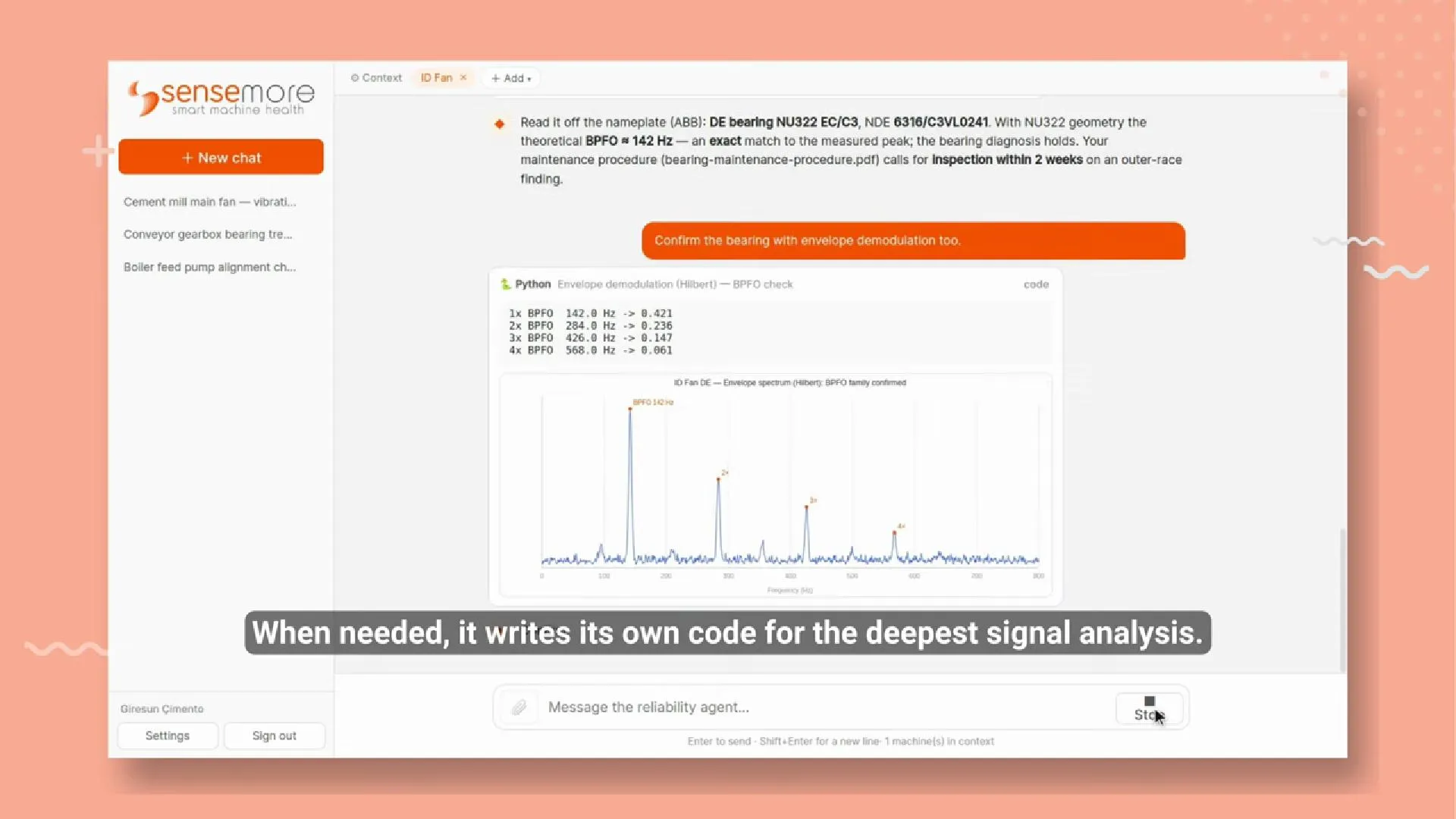
When the diagnosis is ready it proposes an action and stops. Raising the work order is a human decision and stays one; what changes is what that decision costs, because the case arrives already made. And the agent writes what it learned into that machine’s memory, including the causal chain it established, so the next investigation starts from what is already known.
If You Used the Bot
The Telegram integration is no longer running. The Reliability Agent is part of LAKE, next to the monitoring it draws on and the maintenance management module it raises work orders into, so the alert, the diagnosis and the job it turns into finally sit in one place.
Frequently asked questions
Is the Sensemore Maintenance Bot still available?
No. The bot ran as a Telegram beta from January 2023 and has been retired. The work it did is now done by the Sensemore Reliability Agent, which lives inside the LAKE platform rather than in a messaging app and returns a diagnosis with the evidence behind it instead of an alert.
What replaced the Sensemore Maintenance Bot?
The Sensemore Reliability Agent, a digital reliability engineer inside LAKE. You pick a machine, or ask it to review the whole facility, and put the question in your own words. It works the case the way an experienced engineer would, then comes back with a diagnosis, the evidence behind it and a proposed action.
Why was a notification bot not enough?
An alert says that something changed, not what is wrong or what to do about it. A rise in vibration at running speed can be imbalance, a soft foot, or damage left behind by an earlier failure, and a single reading cannot separate them. Someone still had to open the platform, pull the spectrum and compare it against history. The agent does that work itself and only shows a finding once it has been verified.
Can the Reliability Agent open a work order on its own?
No. It proposes one and stops there, because the critical decision stays with a person. What changes is what that decision costs: the case arrives already made, with the evidence attached, so approving it takes seconds rather than an afternoon of chart reading. Once approved, the work order opens with the context on it.
Do you need to know vibration analysis to use the Reliability Agent?
No. The conversation happens in ordinary language and the answer is written for whoever is responsible for the machine rather than for a specialist. The full evidence chain is there for anyone who wants to check the reasoning, which is what makes it usable by a specialist as well.